

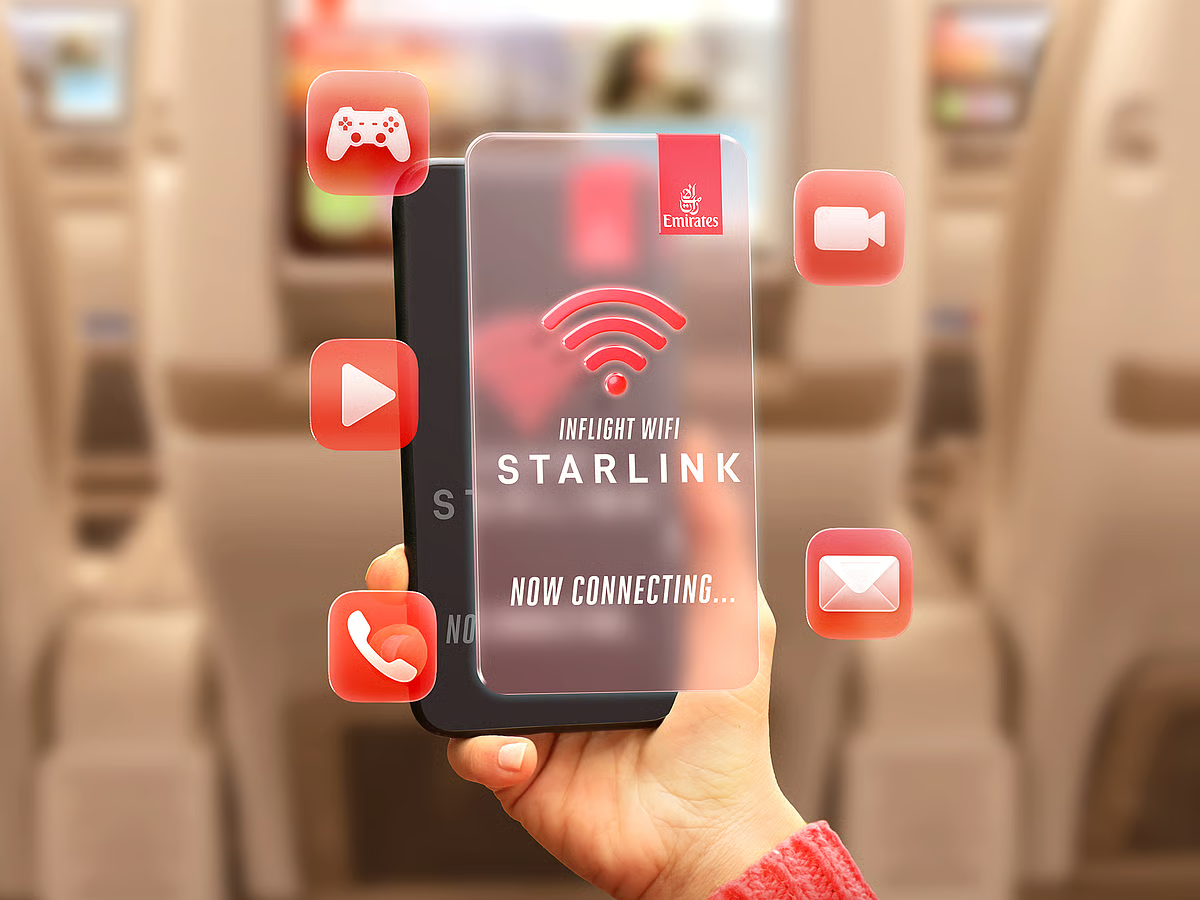

Starlink UAE launch has officially brought SpaceX’s satellite internet service to the United Arab Emirates, with subscriptions now open for residential and business users.
The service went live in March 2026 after the UAE appeared on Starlink’s official availability map, confirming that users in the country can now sign up and access satellite-based internet.
Plans and pricing
Starlink has introduced multiple plans in the UAE. The “Residential Lite” plan is priced at AED 230 per month, while the standard residential plan costs around AED 300 per month. Business plans are also available, starting from about AED 248 per month.
Customers must also purchase the hardware separately. The standard kit, which includes a satellite dish and Wi-Fi router, costs around AED 1,465, while a smaller portable kit is priced lower.
How the service works
Starlink operates using a network of low-Earth orbit satellites instead of fibre cables or mobile towers. This allows users to access the internet in locations where traditional infrastructure is limited or unavailable.
The system is designed to deliver reliable internet with lower latency compared to older satellite services. It is especially useful in remote areas such as deserts, offshore sites, and temporary work locations.
Position in the UAE market
Starlink is entering a market dominated by fibre and mobile networks. It is not expected to replace fibre connections in cities, where existing providers offer faster and more stable services. Instead, it will act as a complementary option for backup connectivity and underserved areas.
The service also supports mobile use through dedicated plans, allowing users to stay connected across different locations without fixed infrastructure.
Regional expansion
Starlink UAE launch is part of SpaceX’s wider expansion across global markets. The service is already active in many countries and continues to grow as demand increases for flexible internet solutions.
With its entry into the UAE, Starlink adds a new layer to the country’s digital ecosystem, particularly in areas where traditional connectivity remains limited.