

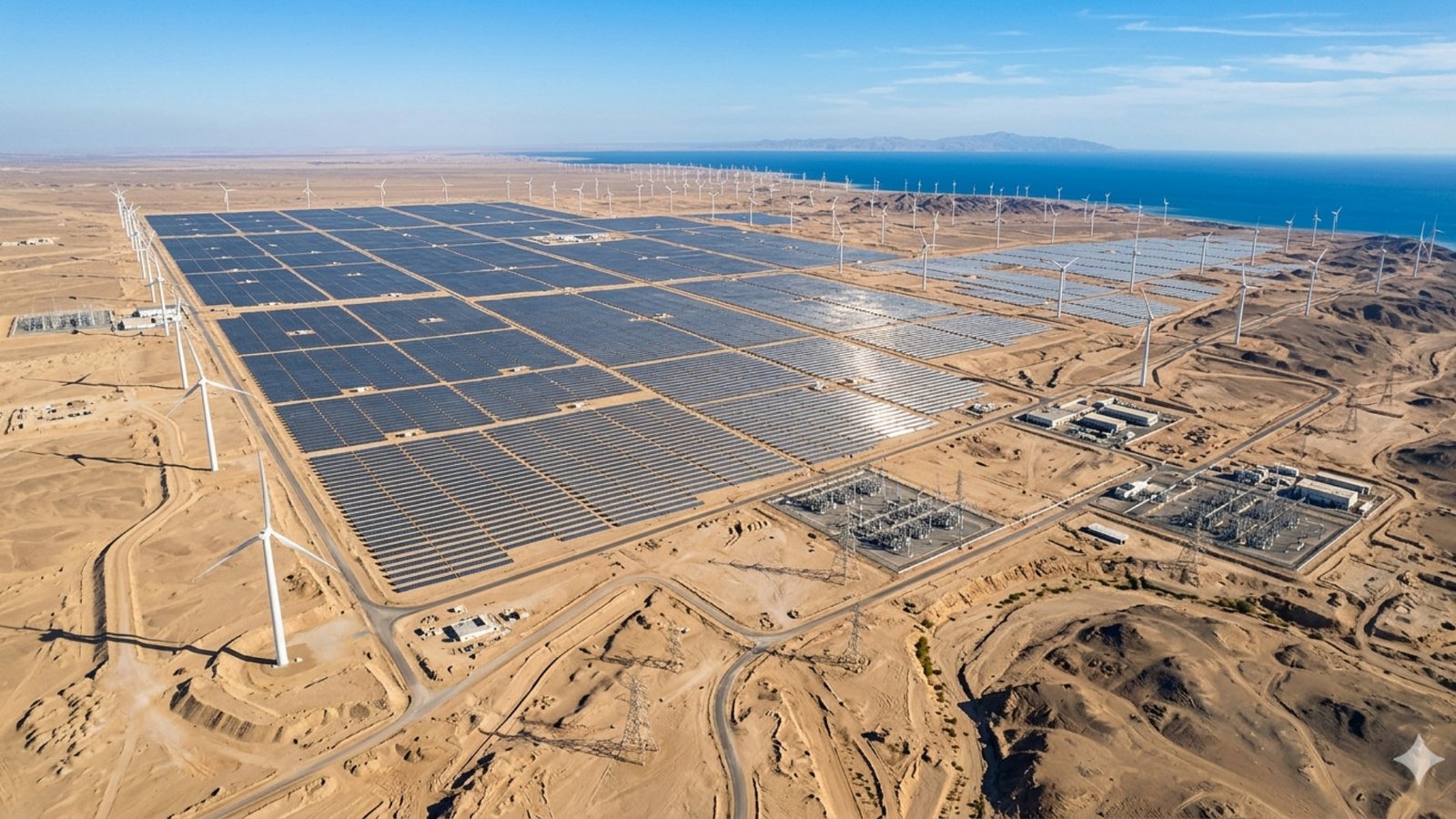

Egypt renewables PPAs have been formally signed for 5.6GW of new clean-energy projects, marking one of the country’s largest power procurement moves. The Ministry of Electricity and Renewable Energy signed the agreements with a group of private developers to expand solar, wind, and battery storage capacity across multiple sites.
New Projects Across Key Regions
The signed PPAs cover a mix of solar, wind, and energy-storage facilities. The largest wind project under this package is the 900MW plant at Ras Shukeir on the Red Sea coast. It will be developed by a consortium that includes Orascom Construction, Engie, and Toyota Tsusho.
In Upper Egypt, a major 2GW solar photovoltaic park and a 2,000MWh battery energy storage system will be built near Naga Hammadi. This project is led by the United Egypt Group for National Industries. The battery system will support the grid by storing excess solar power and supplying electricity during peak demand.
Two additional solar projects for the El-Oweinat region, one of 320MW and another of 400MW, are also included in the agreements.
Long-Term Offtake and Grid Support
All projects under these PPAs will sell electricity to the Egyptian Electricity Transmission Company under long-term contracts. These agreements provide revenue certainty for developers and help the government secure a reliable, clean-energy supply.
The inclusion of battery storage plays an important role in stabilising the national grid. It will help balance intermittent output from solar and wind power plants and improve overall energy reliability.
Part of Egypt’s Clean-Energy Strategy
Government officials say the new projects support Egypt’s wider plan to raise the share of renewable power in its electricity mix. The developments will help reduce dependence on fossil fuels, cut emissions, and support local economic activity through new jobs in construction and operations.
Egypt’s renewables PPAs are expected to attract more private investment into the country’s energy transition. The new capacity will also help meet rising domestic electricity demand while strengthening long-term energy security.