

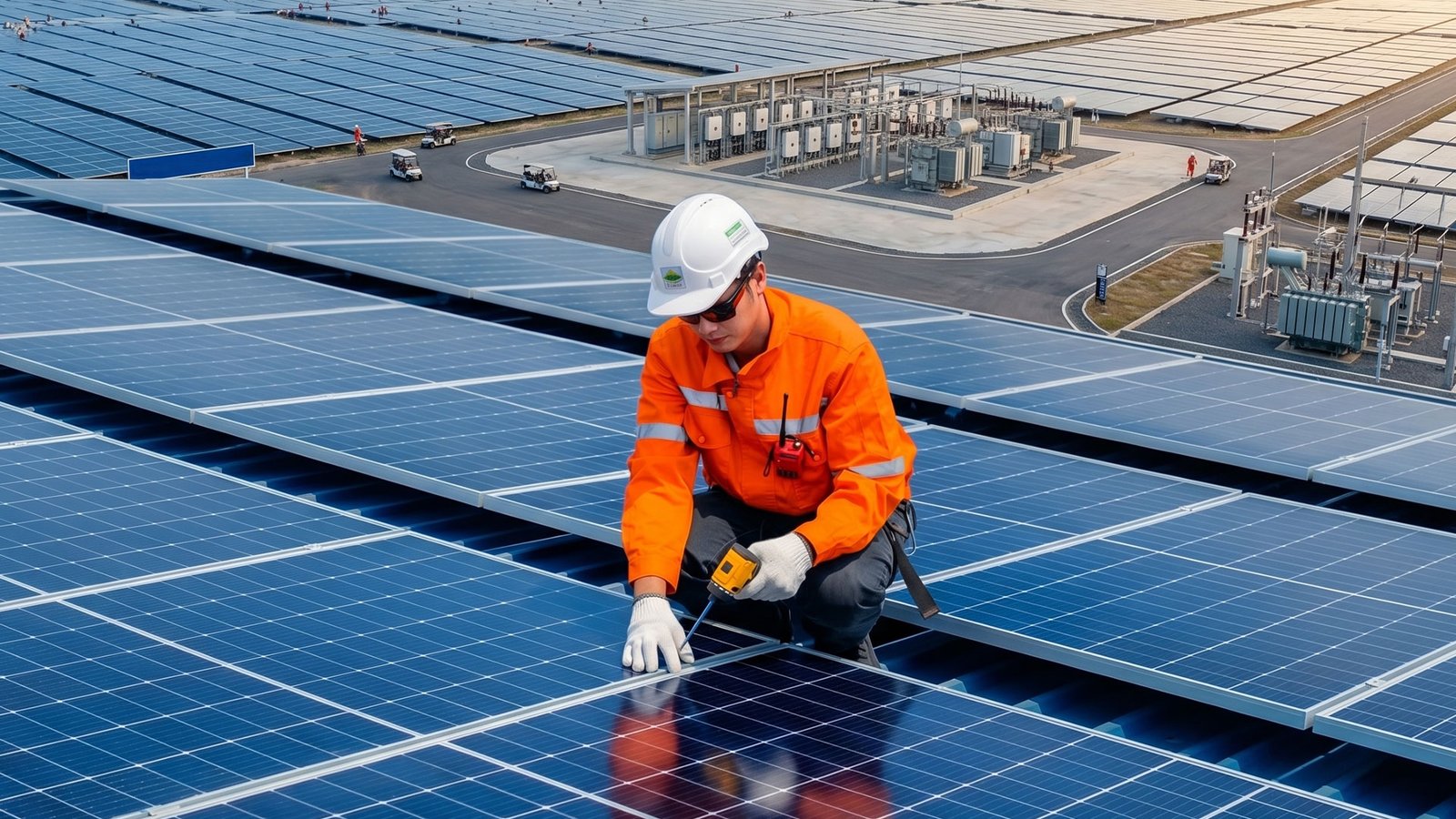

The EBRD Egypt solar project is moving ahead with confirmed financing to expand the country’s renewable energy capacity. The European Bank for Reconstruction and Development (EBRD) has approved a $65 million loan to support the development of a 200MW solar photovoltaic plant combined with battery storage in Benban, near Aswan. The project is being developed by HAU Energy and is part of Egypt’s ongoing efforts to strengthen its clean energy infrastructure.
The facility will include a 120MWh battery energy storage system, which will help improve grid stability and allow better use of solar power during non-sunlight hours. This combination of solar generation and storage is becoming increasingly important as Egypt works to balance energy supply and demand more efficiently.
Project scale and funding details
Under the plan, EBRD funds 200MW of solar capacity through this financing, supporting the construction and development of the plant. The funding is directed toward building infrastructure that will add significant capacity to Egypt’s electricity network.
The project is expected to reduce carbon dioxide emissions by up to 280,000 tonnes each year. This aligns with Egypt’s broader push to lower emissions and increase reliance on renewable sources.
HAU Energy, the project developer, is backed by a group of investors including Hassan Allam Utilities, EBRD, and Meridiam. The company has been involved in several energy projects in Egypt, particularly in the renewable sector.
Role in clean energy development
The EBRD Egypt solar project reflects a steady increase in green energy transition projects across Egypt. Large-scale solar developments, especially in areas like Benban, have already contributed to expanding the country’s renewable energy base.
This project adds to that progress by introducing battery storage alongside solar generation. The storage system will allow excess electricity generated during peak sunlight hours to be saved and used later, improving efficiency and reducing waste.
The EBRD has been active in Egypt since 2012, investing in infrastructure and energy projects with a focus on sustainability and private sector growth. Its continued support highlights confidence in Egypt’s renewable energy sector.
Technology and workforce impact
A key feature of the project is the integration of modern battery storage technology. This system supports a more stable electricity supply by managing fluctuations in solar generation.
In addition to infrastructure, the financing includes technical support programmes. These are aimed at building local skills in renewable energy, with a focus on training young professionals. There is also an effort to increase participation in technical roles, supporting workforce development in the sector.
Outlook for the sector
With EBRD funds 200MW in this latest project, Egypt continues to expand its solar capacity through practical and scalable solutions. The combination of solar power and storage is expected to play a larger role in future energy planning.
The EBRD Egypt solar project shows how targeted financing and technology can support reliable renewable energy development. As more green energy transition projects move forward, Egypt is steadily building a stronger and more flexible energy system.