
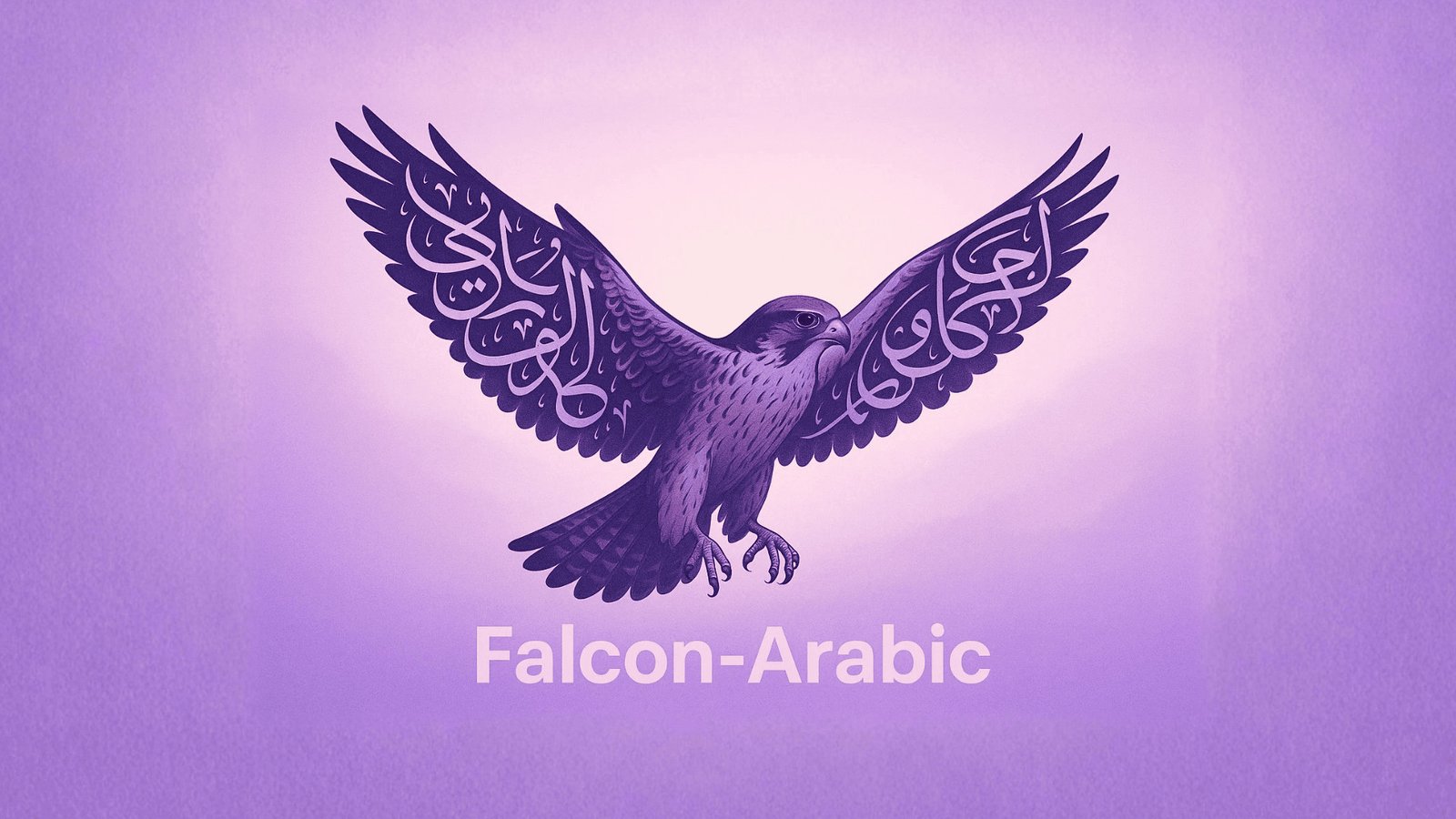

The United Arab Emirates made headlines in early 2026 by unveiling Falcon H1 Arabic, the world’s top-performing Arabic-language AI model. Developed by Abu Dhabi’s Technology Innovation Institute, this breakthrough came from years of focused effort to tackle the unique challenges of Arabic in artificial intelligence. It tops global leaderboards, proving smaller, more innovative designs can outshine giants.
Roots in Abu Dhabi’s Tech Vision
Abu Dhabi has long invested in becoming a global tech leader. The Advanced Technology Research Council oversees this push, with TII as its research engine. Falcon H1 Arabic stems from that drive, building on earlier Falcon models released in 2023. Those first versions put the UAE on the AI map with open-source releases that drew worldwide attention.
Leaders like His Excellency Faisal Al Bannai, adviser to the UAE President and ATRC Secretary General, championed the project. He stressed the need to create AI that fits the region’s needs, not just copy Western tools. Dr. Najwa Aaraj, TII’s CEO, highlighted how it responds to local demands in education, health, and business. Their backing turned ambition into reality.
Tackling Arabic’s Tough Challenges
Arabic isn’t like English for AI training. Words change meaning by context, sentences flex in structure, and dialects vary wildly across countries. Most big AI systems train mostly on English data, so they stumble on nuances like honorifics, idioms, or casual speech. Falcon H1 Arabic fixes that head-on.
Developers curated high-quality Arabic datasets, covering Modern Standard Arabic and dialects from the Gulf to North Africa. They focused on real-world use, ensuring the model grasps cultural hints and long texts without losing track. This groundwork let a mid-sized model punch above its weight.
A Fresh Architecture for Speed and Smarts
Forget the usual all-Transformer setups in models like GPT. Falcon H1 Arabic uses a hybrid Mamba-Transformer design. Mamba handles long sequences efficiently, slashing compute needs while keeping accuracy sharp. This mix shines for Arabic’s complexity, boosting context up to 256,000 tokens, enough for complete contracts or reports.
Available in 3B, 7B, and 34B parameter sizes, it suits phones to servers. The 34B version scores 75.36% on the Open Arabic LLM Leaderboard, beating Meta’s Llama-3.3 70B and China’s Qwen 2.5 72B. Even the tiny 3B tops Microsoft’s Phi-4 Mini on Arabic tasks.
Benchmarks That Prove the Point
Tests show Falcon H1 Arabic leading across boards. On OALL, it rules general Arabic tasks. Specialized checks like 3LM for STEM reasoning, ArabCulture for context, and AraDice for dialects all yield top marks. It reasons through math, handles regional slang, and remains stable with significant inputs.
This isn’t just numbers. It means reliable tools for Arab users tired of clunky translations or cultural misses. Smaller size means lower costs and quicker runs, opening doors for startups and governments alike.
The Build Process Step by Step
TII began by collecting data, scraping clean Arabic text from books, news, and forums. They cleaned it rigorously, balancing dialects and domains. Next came pre-training on massive clusters in Abu Dhabi, fine-tuned with human feedback for safety and relevance.
Teams iterated endlessly, tweaking the hybrid architecture. Collaboration with global experts helped, but UAE talent led the way. Open-sourcing under Falcon Foundation ensured community input, speeding improvements. The launch came on January 5, 2026, after quiet months of testing.
Real-World Impact Across Sectors
In healthcare, it scans patient records in Arabic, spotting patterns doctors miss. Legal firms use it for contract reviews, catching fine print in dialect-heavy deals. Schools receive tailored lessons that preserve culture while teaching STEM.
Businesses save on cloud bills since it runs locally. Governments streamline services, from chatbots to policy analysis. It’s a sovereignty play, too; the UAE cuts reliance on foreign AI and tailors tech to Arab realities.
Voices from the Top
Faisal Al Bannai called it proof of the UAE’s depth of talent. “AI leadership means useful tools for all,” he said at a Make It in the Emirates event. Dr. Aaraj added that it unlocks education and enterprise in Arabic, fueling global progress.
Experts outside the UAE agree. Industry watchers see it as a model for language-specific AI, inspiring places like India or Brazil. It shows architecture and data beat sheer size.
Why It Matters for the Arab World
Falcon H1 Arabic closes a gap. Billions speak Arabic, yet AI lags. Now, developers build apps in their own tongue, from poetry generators to risk assessors. UAE’s move sparks a Gulf AI race, with Saudi Arabia and Qatar watching closely.
Efficiency stands out. While giants guzzle power, Falcon H1 delivers elite results with lean efficiency. This green edge fits the UAE’s sustainability goals. Future versions promise even more, with multimodal support for vision or voice.
A New Chapter in Global AI
UAE didn’t just build an AI; it redefined Arabic’s place in tech. Falcon H1 Arabic proves thoughtful design wins races. From Abu Dhabi’s labs to Arab homes, it’s changing how we talk to machines, in our own words.
Image Credit – falcon-lm.github.io