

Saudi Arabia has more women in tech startups than most of Europe. Read that again.
According to an Endeavour Insight report published in April 2022, women made up 28% of participants in Riyadh’s technology startup sector in Q3 2021, more than 10 percentage points above Europe’s average of 17.5% in the same period. In a region the world assumes is lagging on gender inclusion, Saudi women tech founders were outpacing some of the most developed economies on the planet.
And yet, in 2024, female-founded startups across the entire MENA region raised just 1.2% of total venture capital funding, $27.6 million out of $2.3 billion, according to Wamda’s annual review. In the first half of 2024 alone, female-led companies pulled in $1.8 million across 15 deals. Male-led startups attracted $760 million in the same window.
So what’s actually going on? And why, despite all the Vision 2030 momentum, the accelerator programmes, the ministerial commitments, does the check still not follow the capability?
The Number That Should Have Changed Everything
When Saudi Arabia’s Vision 2030 launched in 2016, women’s labour force participation sat at around 17%. By 2021, it had more than doubled to 35.6%, well past the programme’s own 30% target, achieved years ahead of schedule.
That’s not incremental. That’s a structural shift.
The legal reforms that drove it were real and consequential: women gained the right to start businesses without a male guardian’s approval, open accounts independently, register companies, and operate across sectors that were effectively closed to them before. And the momentum hasn’t stopped. Saudi women’s labour participation reached 36.2% in Q3 2024, according to the General Authority for Statistics.
A March 2025 Mastercard survey found that 78% of women in Saudi Arabia are now actively considering starting their own business. That’s a pipeline with enormous pressure building behind it.
The conditions changed. The ambition is undeniable. So the question isn’t whether Saudi women tech founders want to build, it’s whether the ecosystem around them is keeping pace.
What Saudi Women Tech Founders Are Actually Building
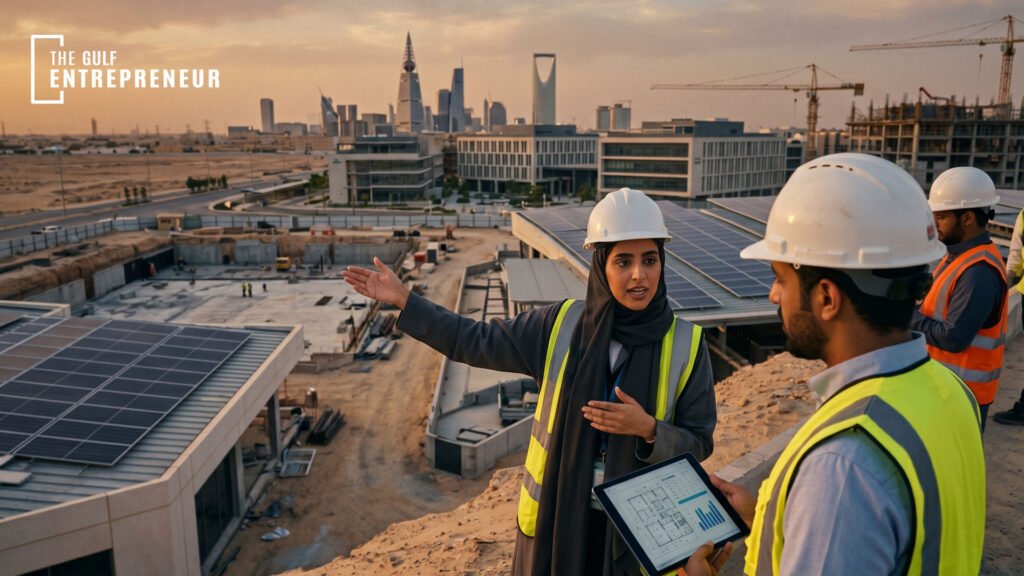
Before getting to the funding question, it’s worth looking at where Gulf women are building, because the sectors aren’t random. They’re deliberate. Female founders across the UAE, KSA, and Bahrain are concentrated in three areas where the product-market fit is personal, not theoretical.
Fintech: Designing for the Women the System Left Out
Women across the Gulf, particularly in expat communities and lower-income brackets, have historically been underserved by traditional banking. Female founders building in fintech often arrive at the problem with firsthand knowledge of what doesn’t work. That’s not just empathy. It’s an insight that male-led product teams regularly miss.
The UAE’s fintech sector dominated regional VC in 2024, attracting $265 million across 47 deals. Women-led ventures are increasingly visible within it, with platforms like Womena bridging early-stage female-founded fintechs with angel investors, filling the pre-seed gap that institutional VCs rarely touch.
HealthTech: Seeing Patients Others Didn’t Notice
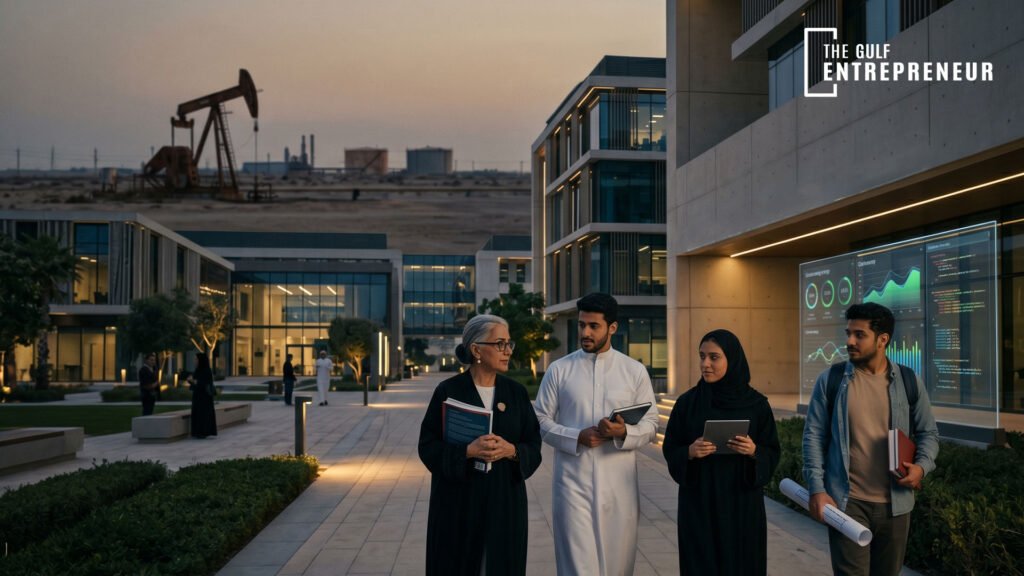
Women-led healthtech is one of the most compelling categories in the Gulf right now. Khatija Ali, founder of UAE-based BioSapien, extended her company’s pre-Series A round to $7 million in January 2025, backed by Global Ventures and Golden Gate Ventures, with the initial connection made through Hub71 in Abu Dhabi. BioSapien’s flagship product, MediChip, is a 3D-printed drug delivery platform designed for localised cancer treatment with minimal systemic side effects.
That’s not a token round. That’s a cancer-treatment company, built by a woman, attracting serious institutional capital.
Female founders in Gulf healthtech are often addressing gaps that didn’t register as gaps until a woman was in the room: maternal health, chronic disease management, and access to care for non-Arabic-speaking expat communities in cities like Dubai and Abu Dhabi.
EdTech: Building the Gulf’s Missing Middle Layer
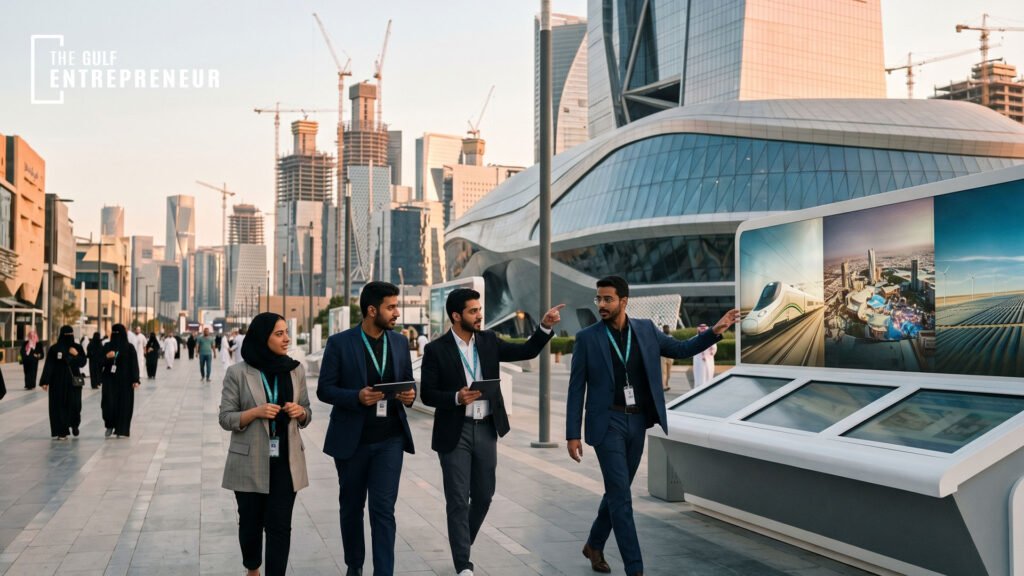
Education is where some of the region’s sharpest female-led exits are happening. Ostaz, a UAE women-led edtech startup supported through Standard Chartered Foundation and Village Capital’s Women in Tech accelerator, was acquired by Inspired Education Group, a global education operator. That’s a real exit, with a real acquirer.
In Saudi Arabia, Mounira Jamjoom co-founded Aanaab, an online professional development platform built for teachers across the MENA region. It’s precisely the kind of company Vision 2030’s education reform agenda needs: locally grounded, regionally scalable, and plugging a gap that international EdTech platforms haven’t figured out how to fill.
So Where Is the Money?
Here’s the direct answer: it’s going mostly to men.
The Wamda full-year 2024 data make it plain. While $27.6 million reached female-founded startups, representing just 1.2% of all funding, co-founded mixed-gender teams raised $192 million, and male-led startups captured the vast majority of the remaining pool. A separate Magnitt analysis of Saudi Arabia’s top 200 most-funded startups between 2014 and 2023 found that female-only startups, making up 3% of the total, received just 0.4% of VC funding.
The funding gap isn’t a perception problem. It’s structural, rooted in who sits on investment committees, who gets warm introductions, and whose business models receive the benefit of the doubt in a pitch room.
This isn’t unique to the Gulf. Globally, wholly women-led companies attracted just 1% of VC funding in 2024. But the gap feels sharper in the Gulf precisely because the founder pipeline is building faster than the capital infrastructure around it. And according to Mastercard’s research, 32% of Saudi women cite lack of funding as their primary barrier to starting a business.
The public sector is trying to close that gap from above, even as private capital moves slowly from below.
Vision 2030 Changed the Rules. Did the Ecosystem Get the Memo?
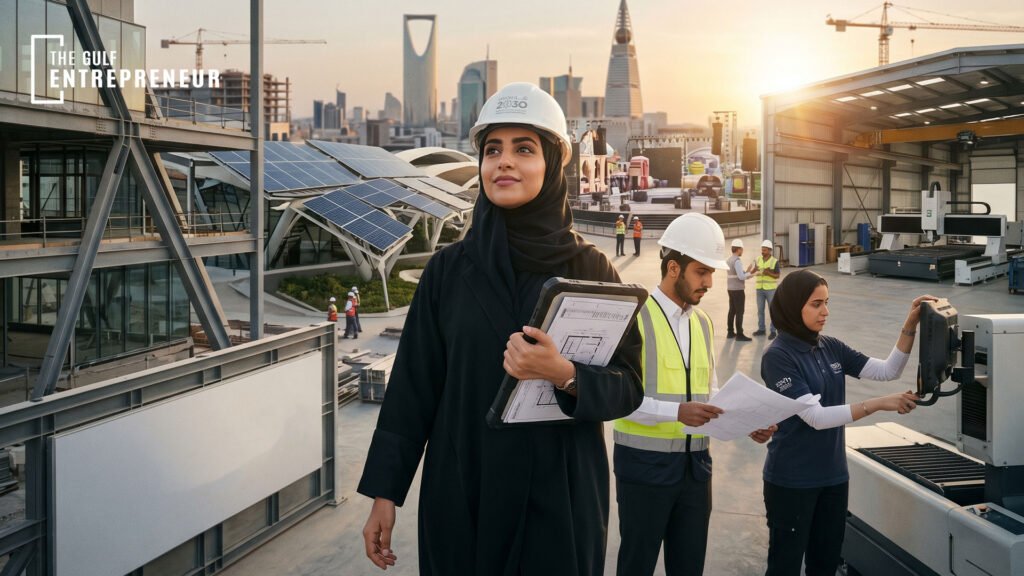
Saudi Arabia’s Vision 2030 framework didn’t just open doors for female entrepreneurs; it built new ones.
Monsha’at, the Saudi SME authority, now actively funds and trains female founders. The Social Development Bank offers zero-interest business loans specifically for women entrepreneurs. Wa’ed, Aramco’s entrepreneurship programme, funds tech and innovative businesses started by women. Saudi Venture Capital (SVC) has committed to female-led and tech startups. And Blossom, Saudi Arabia’s female-focused accelerator, launched by Bayan Linjawi, exists specifically to help women-led startups secure funding and scale.
These are meaningful developments. The policy architecture is there. But policy and private capital don’t always move together.
The honest read on Vision 2030’s impact is this: it removed the legal barriers, built some infrastructure, and shifted cultural perception measurably. What it hasn’t yet done is redirect significant private VC money toward female-led companies at scale. That part is still a work in progress.
The Infrastructure Is Finally Arriving
What’s changed most in the last two years isn’t the ambition of female founders. What’s changed is the ecosystem beginning to show up around them.
In the UAE, Hub71’s Ventures Lab in Abu Dhabi explicitly prioritises female entrepreneurs and Emirati nationals, with fintech, healthtech, and edtech startups given direct preference. In Bahrain, Standard Chartered’s Women in Tech programme, now in its fifth edition as of 2024, runs in partnership with Bahrain FinTech Bay and the Central Bank of Bahrain, selects ten female-led startups each year for structured support, mentorship, and funding.
Since its UAE launch, the Standard Chartered Foundation and Village Capital Women in Tech accelerator have supported 61 women-led startups. Five of those have been recognised on the UAE Ministry of Economy’s Future 100 list. In 2025, 71 women-led startups across the programme’s Africa, Middle East, and Pakistan cohort collectively generated over $2 million in additional revenue.
That last number matters. It demonstrates that the model works when structured resources actually reach founders.
The Gap Is Closing – Just Not Fast Enough
Saudi women tech founders, and their counterparts across the UAE and Bahrain, are not waiting for the ecosystem to catch up. They’re building anyway, in fintech, healthtech, and edtech, in sectors the Gulf’s national development agendas genuinely need to succeed.
The infrastructure is arriving. The legal environment has transformed. The cultural shift is real, 78% of Saudi women considering entrepreneurship is not a marginal statistic, and it didn’t come from nowhere.
But the funding gap between what female founders are building and what investors are backing remains wide. And closing it isn’t just a fairness argument, it’s an economic one. According to State Street Global Advisors, closing the gender gap in the MENA workforce could add $2.7 trillion to the region’s economy.
The capability is there. The pipeline is there. The question, the one this ecosystem still hasn’t fully answered, is whether Gulf investors are going to show up for female-founded startups the same way they show up for everyone else.
The stat says 28%. The checks don’t yet say the same.